Signed in as:
filler@godaddy.com
Marie Boucher is Program Head in English at the Middlebury Institute of International Studies at Monterey. She co-leads the annual International Poetry Week and monthly International Poetry Gatherings in Monterey. She has read at multiple venues in Monterey Bay, San Francisco, Fresno, and Santa Cruz. Marie has published in the Porter Gulch Review, Monterey Poetry Review, Solo Novo, Poet’s Choice and other anthologies. Marie is the Editor-in-Chief for Doves Born of Flames: Poems of Peace from Many Lands, a multilingual anthology (2025) and her upcoming collection Becoming River (2025) and chapbook, Peace for Palestine.
The Nature of Words
Words can be arrows---pointed straight
at the heart,
poisonous darts,
poking nerves,
salting wounds,
or they can be
Luminous butterflies
passing by,
inspiring love
miraculous things,
dreams and prayers
cocooning at night, waiting for flight.
Words are potent things
carried on tongues
stitched into tapestries
They can liberate, enslave,
or drive us to an early grave.
The most dangerous words are lies
We’ve been forced to swallow,
ones that burrow in our marrow,
fester and belie
our decency,
our humanity.
How dare we speak words
igniting change
unseating power
of those who’d rather blame
victims, banish voices,
so afraid are they of our rejoicing,
So, they stitch our mouths shut,
forbid us to speak,
lest they forgot
seeds they forced us
to swallow become vines
intertwined on walls
of our spines, gathering
longings and sorrows,
germinating in the dark
on wintry nights, ruminating on
every unspoken word,
til they burst through,
untangling vines of desire and survival,
unsilencing
words of belly, bowels, and lungs,
singing heartfelt songs unsung for the first time.
You can not suppress longings of lovers
humble prayers destined for
children and others
facing their oppressors.
You can not accuse butterflies of
unlawful liberation.

César Love is a social worker by day and a poet by night. A Latinx poet influenced by the Asian masters and a Bay Area native, César is also a co-editor of the Haight Ashbury Literary Journal and the author of two poetry collections, While Bees Sleep and Birthright. He is also the author of Baseball: An Astrological Sightline.
Trespasser Shoes
Shoes perfect for the fastest dance
Shoes so cool
Even jaywalkers swoon.
Shoes that scale barbed wire
Two taps and you’re invisible
To every cop and guard.
Shoes that violate the dress code
Shoes that never came in a box.
The shoes that skip over stairs
That short-circuit escalators
Three taps and you leap above
Foul lines, flag poles, border checkpoints.
Trespasser shoes
Polished with a darker shade of saint.
Hiding in your closet
Waiting to walk on water.
Trespasser Shoes
Versión al español: Fer de la Cruz
Idóneos zapatos para el baile más veloz,
tan chéveres
que incluso los peatones que cruzan carreteras acaban extasiados;
zapatos que trascienden las púas de los alambres:
dos golpes de tacón y te vuelves invisible
a los ojos de la migra y patrullas fronterizas;
zapatos desafiantes de códigos de ropa;
zapatos que no vienen en cajas de zapatos
y vuelan por encima de escaleras,
y que incluso provocan algún corto circuito
por la escalera eléctrica que esté sobrevolando:
tres golpes de tacón y ya trasciendes
interminables colas, astas de las banderas y retenes;
zapatos para entradas ilegales
boleados con oscura piel de santo
ocultos en tu clóset, en espera del momento
de caminar también sobre las aguas.

Originally from Lebanon, Rana Issa moved to Monterey over two decades ago and has since dedicated her career to teaching Arabic, politics, history, and public policy at the Middlebury Institute of International Studies, where she also served as Head of Arabic Language Studies. Her lifelong love of poetry—sparked by a poet uncle and deepened through years of teaching—led her to found the Arabic Poetry Group in 2018 and co-create the International Poetry Gathering in 2019. Since 2020, she has co-led the monthly International Poetry Gatherings in Monterey and co-founded the Global Villagers Community to foster cross-cultural connection and community engagement. Passionate about bringing people together, she continues to enliven the Monterey Peninsula with events celebrating art, language, and shared humanity.
Silver Black
On a one long route
A bird with no branch
A tree with no roots
A hill with no foot
A sea with no salt
A beach with no sand
A murder with no crows
A flower with no nectar
A hummingbird with no wings
She stands broken
land stolen
Dreams woken hbb
Families torn
Into the mist, not black, not white, her shimmers withered

Daniel Arias is a Ph.D. candidate in the Department of Literature at the University of California, Santa Cruz. His research focuses on twenty-first-century experimental Latinx poetry and the publishing dynamics of Latinx authors in the U.S. publishing industry. He is the proud son of Mexican immigrants, and his favorite hobbies are hiking and camping.
Worth My Weight in Prickly Pears
In response to my broken heart
My therapist says I have a golden one
Reminding me golden hearts attract
golden hearts
This will pass
pass
pass
Maybe it's the Mexican in me
Some days
I feel a nopal beating in my chest
A prickly pear
No bright red bulb of fruit here
I gave it away
To the first taker
And they left
Lesson
This nopal is ordinary
Wide flat and green
Paddles reaching for the sun
In prayer
Even at night
Lesson
Covered by espinas
Self-defense
It carries the desert's only rival to gold—
Water
Growing so many prickly spines
Refusing to be eaten
Imagine being that fucking stubborn
Lesson
Mi Mami cleaned them with a knife
Since the only way
To beat something sharp
Is with something sharper
Hurt what hurts you
Lesson
She left it bald on the counter
Covered in shallow wet patches
Clinging to tears
It was sliced
Tragedy
Blended for mi Apa’s licuado
A prayer to lower his cholesterol
Answered
That's better than gold
Lesson
Mi Mami’s favorite recipe
A pico de gallo with
One inch squares of diced nopales
Chewy rubbery texture
Slimy gelatin interior
I hardly ate it
Forgot
My ancestors must be ashamed
I rejected this
Native nopal—
Myself
Remember
To make sustenance out of
This deserted plant
That's better than gold
Lesson
This heart will heal
I’m made for this and more
This nopal
nopal
nopal
I can make gold out of anything
Even this hurt
Lesson

A proud Chicana from California’s rich Central Valley, Melanie Berru is a mother, activist, and community college educator who teaches both in the college classroom and inside the local jail. She has dedicated her life’s work to uplifting the community that raised her. Rooted in academia, the nonprofit sector, and grassroots building, her journey has long centered on service, justice, and collective empowerment. Now, she is stepping into a new chapter; one that invites her into the creative unknown. Through writing, she walks with her emergent self into a space where unsaid words ache to be born and where storytelling becomes a sacred practice of liberation.
Her published articles in Stanislaus Connections and Hip Latina offer powerful reflections rooted in culture, identity, representation, justice, love, and lived experience. Melanie stands in fierce commitment to Central Valley representation, challenging others to turn their gaze toward its brilliance, resistance, and the voices that refuse to be ignored.
Central Valley, presente.
To the Misunderstood Woman
To the Woman
whispered about in rooms she enters,
Judged for the audacity of her voice
For speaking truth
not into silence,
But into the vast, listening ether.
To the woman
who chose integrity over approval,
Who relinquished comfort for conviction,
Who walks a path shaped by her own hands,
Unafraid of the thorns that line it.
For living
not by permission,
But by the fire of your own knowing
You may be criticized,
You may be cast aside.
But you are not bound.
You are not broken.
You are free.

Elan Chavez (they/them) is a poet who was born on the occupied land of the Muwekma Ohlone people (called San Jose), who now resides on the occupied land of the Miwok people (called the San Joaquin Valley), the beauty and spirit of these lands constantly inspire their poetry. Their writing is a reckoning with their experiences as a worker in the crush and cruelty of capitalism and as a witness to the continued violence of colonialism and commodification. Their poetry is also a response with the intention and belief that transformative human connections can be built through poetic communication and it is these connections that can propel us all towards a more just and loving world.
Excerpt from "Pers Substantium":
How could I go on? There, in what was left. Untouched, the white sheet, pale stone,
the living glowing, green Tibouchina leaf, then darkened and smashed by the weight of my touch, the oils of my hand, the trace of everything I am.
Became as the chick,
within the egg,
then,
without the shell, the harsh atmosphere, oxidizing, degrading.
Curled, eye closed,
beak agape, bead tongue, throat exposed, small gasping, and a shudder, the struggling,
the only sign of life, incandescent,
skin thin film,
transparent, folded over,
soft creases, down spread sprouting,
a crackle, atop the surface, finest fibrils.
Soft the hand, exchange, the touch,
one cooler,
than the other,
take me,
hold me,
that’s enough

James Coats is an award winning author, poet and educator from Southern California. As a creative change agent he believes the arts can inspire the youth and influence positive change in the world. Five-time San Bernardino County Poetry Out Loud Judge and four-time Riverside County Teen Poet Laureate Judge. He is the winner of the 2021 San Gabriel Poetry Slam, and has been featured nationally. You can find him attending poetry readings throughout California or follow his poetry via his Instagram @MrLovingWords. He became the Artist in Residence at The Garcia Center for the Arts in 2022. Additionally, you can take a poetry workshop with him through his organization Lift Our Voices Education which hosts an award winning workshop monthly called Be The Change: Social Justice Writing Workshop. He also has four poetry collections: If I had Lived published in 2018, All The Ways You Are Wonderful in 2020, and Home Is A Voice in 2022. His newest poetry collection Midnight & Mad Dreams published by World Stage Press, released in 2022. He is a 2023 Poetry Pushcart Prize nominee.
What Great Law
Were we all cracked jagged in shape
Broken and beautiful dueled inside us
If I were to name this mess, I’d call it fate
Grace found us nearly returned to dust
Broken and beautiful dueled inside us
I’ve witness desire make heaven bow
Grace found us nearly returned to dust
What great law governs our escape now
I’ve witness desire make heaven bow
Listen for the sound of forgotten tears
What great law governs our escape now
Push away joy committed to the fears
Listen for the sounds of forgotten tears
If I were to name this mess, I’d call it fate
Push away joy committed to the fears
We were all cracked jagged in shape

Marlene De La Cruz-Guzmán, Ph.D. is a multilingual poet, literary critic, and university administrator. Her primary research and publication areas are diversity in higher education, women’s literature, critical theory, and African and diasporic literatures. She has received national and university fellowships, published numerous articles, book chapters, and poetry in both Spanish, French, and English. Originally from Guatemala, she grew up in Los Angeles and Miami and has lived and conducted research in Belize, Morocco, Zimbabwe, and South Africa. As a first-generation college graduate in the United States, she has dedicated her professional career to working with marginalized students in higher education, and she has focused her executive leadership and consulting career on diversity, equity, and inclusion. She has presented her poetry nationally and internationally, and she published poetry in Hispanic Culture Review, Latino Stuff Review, and The Awakening, as well as many scholarly articles in peer reviewed journals and edited collections. Marlene holds a PhD in English Literature from Ohio University, an MA from Michigan State University, and a BA from Barry University. She leads a liminal existence between academics, administration, and community activism. She honors her rich cultural heritage as a first generation Guatemalan American, and she enjoys a multilingual life full of literature and culture. She resides in the Midwest with her family. Her home is nestled between the beauty of the Driftless bluffs and the flowing Mississippi River.
Please contact Marlene De La Cruz-Guzmán at marlenedelacruz@icloud.com
Waiting for the Seeds
Childhood dreams
Squashed
Like over-ripe pumpkins
Rise
Like an acrid stench
Over my sleeping body
To remind me:
My brown dreams
Were once
Sweet and meaty
Before the smashing
The seeds grew strong within
Fertile and ready to transform
They waited for the rotting to subside
For their erect coated germ
to touch the tender earth
to slip between its folds
there to burrow in its warmth
After the waiting, they emerged
A thread of green
Carrying the promise of
Multiplied brown blossoms
After the smashing
Latinx dreams flower in every field
Mayra Flores is the proud daughter of Mexican immigrants de Zacatecas y Durango, of her East San José community and mother to her daughter and her words. She is a San José State University graduate and continuous student de las plantitas magicas de su abuelita Sofía. Mayra has been previously published in East Side Magazine and stands on the shoulders of luchistas and mujeres indomables. She carries with her the power to protect our collective joy and stories, with the daily asistencia de sus antepasados y su bolígrafo favorito. Her first book - “Flores - A collection of poetry and stories connecting generations of family across borders and time” - was self published in December 2024. www.mayrafloreswrites.com
TRENZAS
Trenzas, trenzitas
My mother taught
Me how to weave
The dark hair when
I was six, calloused
Fingers pirouetting
Folding our past,
La patria, and her
Favorite pozo santo
Safely within the
Thickness of my
Hair, her dreams of
El Norte and the
Rolling of her Rs
Tucked in every
Pocket of these
Braids, where no one
Could strip away,
Gentrify or bleach out
Her pride and the grief
Of leaving behind
Her fathers bones and
The water haven of
La Concha. I cannot see
Her face as she folds
Hair over hair, memories
Along that third lock,
But I listen as she narrates
What she’s doing
Like quiet prayers
For only god, and me.
Jaime E. Gallardo is a retired attorney born and raised in San Jose, California, married with two adult children and grandchildren. He grew up in downtown San Jose after his family of former farmworkers settled in the Santa Clara Valley. He has been writing since high school.
Excerpt from “The Rabbit Story”
“No te apures”, he said, with a calm voice to soothe me. My grandfather's calm voice tried to soothe me. This is how it ends? He placed the limp rabbit on a bench. He held down the rabbit with his foot. I saw a silver blade in his right hand. It came down. I saw the pink eyes of glare into the yard as they fell to the ground. I heard another chop. Papa bent down and picked up the small rabbit foot with a soft pad that I remember brushing against my cheek at night. “Para suerte”, for luck. But I knew it did not provide luck to this rabbit. That night the whole family enjoyed a fried rabbit dinner, a meal I could not eat.

Lucy Rose Johns, a member of the Oneida Nation of Wisconsin, is a lifetime member of Wisconsin Fellowship of Poets. At Returning the Gift, she made friends with remarkable women writers who invited her to their groups and now she spends time Zooming around Círculo.
Katsitsyaka'?waks
My grandfather, in native tradition,
gave me an Oneida name, Katsitsyaka'?waks,
the closest English translation is "She is sifting the
flowers."
I am not the beautiful perfect flower
to be singled out,
poised in a precious vase to be admired
and nose caressed for its sweetness.
I am a service flower
sifted in the process
of harvesting and drying plant material
for use in medicine, seasonings and food preparation,
designed for sturdiness,
to be chopped up, parcelled out,
used in healing, strengthening and encouraging.
This spring I drove past a meadow of native Wisconsin trillum.
I stopped the car as the wind trembled
a flower chain reaction of white petals,
As I watched the wiggles of the graceful ground cover
I took a deep breath
as if to breathe in the lovliness,
when I heard my grandfather speak my name
Katsitsyaka'?waks, “shifting flowers.”

Janet Rodriguez is a writer, teacher, and editor living in Northern California. She is the author of the memoir, Making an American Family, A Recipe in Five Generations (Prickly Pear Publishing, 2022) and has been featured in the recent regional anthology, Sacramento Noir, edited by John Freeman (Akashic Books, 2025). Her work has also appeared in Eclectica, Pangyrus, The Rumpus, and Hobart, among others. She engages themes of morality in faith communities and the mixed-race experience in a culturally binary world. She holds an MFA in Creative writing from Antioch University, Los Angeles.
Pocha
Ever since I was born
I heard, “Control that tongue!”
“Watch what you say!”
“You and your big mouth!”
They said I had no control over my pink muscle
that differentiates between sweet and sour,
salty and bitter, umami or bland—
You understand?
The tongue, the rudder
directs my course
through violent seas, blue
pulsating waves of poetic thought,
but won’t cooperate when I say escritores.
It gives me up in Oaxaca, throwing me out
Like a naked sister, into a party
Of Spanish-speaking relatives, who look at me,
Shamed and hiding myself.
They speak with ease, ambidextrous
Switching hands
Holding pens, holding swords, holding court
With the few poets I need to hear
Who see me, timid as a church mouse,
Voiceless in a corner.
After years of abuse, I go on.
My nose has been broken four times--
It still looks fine.
Dark circles under my eyes
covered by concealer.
Spandex for sagging or dragging.
Only my tongue betrays me.

Norma Smith was born in Detroit, grew up in Fresno, California, and has lived in the San Francisco Bay since the late 1960s. She worked for many years in hospitals and has also worked as a journalist, as a translator/interpreter, community scholar-educator, events and conference organizer, and as an editor and writing coach. Smith's writing has been published in literary, scholarly, and political journals. Recent work has appeared in POETS READING THE NEWS, THE PERSIMMON TREE, and in the anthologies, COLOSSUS:Current, OUR CALIFORNIA, CIVIL LIBERTIES UNITED, DESPUES DEL AGUACERO: Pan Dulce Poets, and BUTTERFLIES IN GAZA (forthcoming). Her book of poems, HOME REMEDY, is available at https://blacklawrencepress.com/books/home-remedy/ . Please see normasmithwriter.com for further information.
WORLD CUP EAST BAY, 2017
Ash on my tongue as I wake
to a language I never spoke.
It interrupts me, pushes back
against my teeth, presses
against my throat, unintelligible.
I can’t understand
Fires to the north,
among the large lakes, Clear
and Berryessa, where the yanqui
land cheats pushed indiosand californios
from those rolling hills—
Was it just last year?
Flat screen nailed high up on the wall
blaring in the café here
on San Pablo, in Berkeley,
State Route 123. Los mexicanos
nos sirvenespresso mientras
we all watch —ojo en la pelota, compas,
eye on the ball. The empire loses
because they don’t know how
to play the game honorably. The goal
erupts and slides across the field.
We wake to all this
on a day when the earth
moves stiffly, the waning moon passes
smooth in the corner
of our surf-ridden eye,
dragging us back, forward, back.
A tide confuses
the molten center. Mountains climb
into the air, throw off cornfields
To our south
crows rise, warning the other flocks
along the sidelines, the no border where
eagle meets condor.
They take it all back—
smoke, tide, wind,
gravity itself, spinning reckless,
another pass blocked.
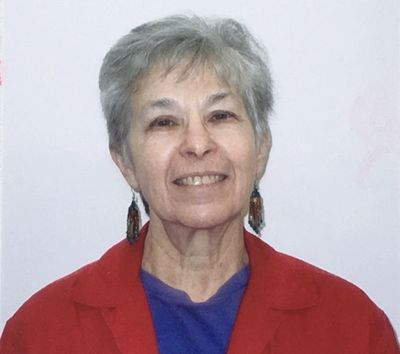
Zheyla Henriksen, ecuatoriana-estadounidense , poeta, investigadora y artista. Reside en los EE.UU. profesora jubilada. Estudió y enseñó en UC Davis donde obtuvo el doctorado y en California State University donde estudió el másters. También enseñó en las Universidades de Stanislaus, Chico, Sonoma State del Pacífico y Contra Costa y en American River y City Colleges. Pertenece al ACH Registró Creativo. Al grupo de Escritores del Nuevo Sol/Writers of the New Sun, al Círculo de Poetas y Al grupo internacional de Vuelo de Mujer. Como artista dirige y baila en el grupo Folklórico Ecuatoriano INTI-TULPA, presentándose en festivales culturales internacionales como Spring Festival of Cultures, International House of Berkeley, University of Berkeley y de UCDAVIS, Internacional Heritage Festival en Modesto y otros festivales latinoamericanos. Pertenece al grupo de Jodette Belly Dance Academy, presentándose en ferias estatales, provinciales e internacionales y al grupo de flamenco Sol y Duende.
Tus ojos y los míos
Tienen la esencia del madrigal en pena
Donde florecen los laureles
Y la flor del capulí me da su esencia
Rueda en mi alma
Tu mirada triste, tu mirada alegre.
Tus ojos el emblema de tu alma
Te leo en cada momento
Que te acurrucas en mi vientre
Los senos, sin saberlo
Se dirigen a la corona de tu pelo
Donde observan alelies
Suspirando mi condena
Y sin saberlo, querido,
Te escribo este poema
¿Has muerto o estás vivo?
No sé si te has perdido
Cántame que en tu canto
Me alegrará mi destino
Mis ojos en tu presencia
Me dirán que existo.

